Category Archives: Freighters Newsletter

The Shipbuilding Situation

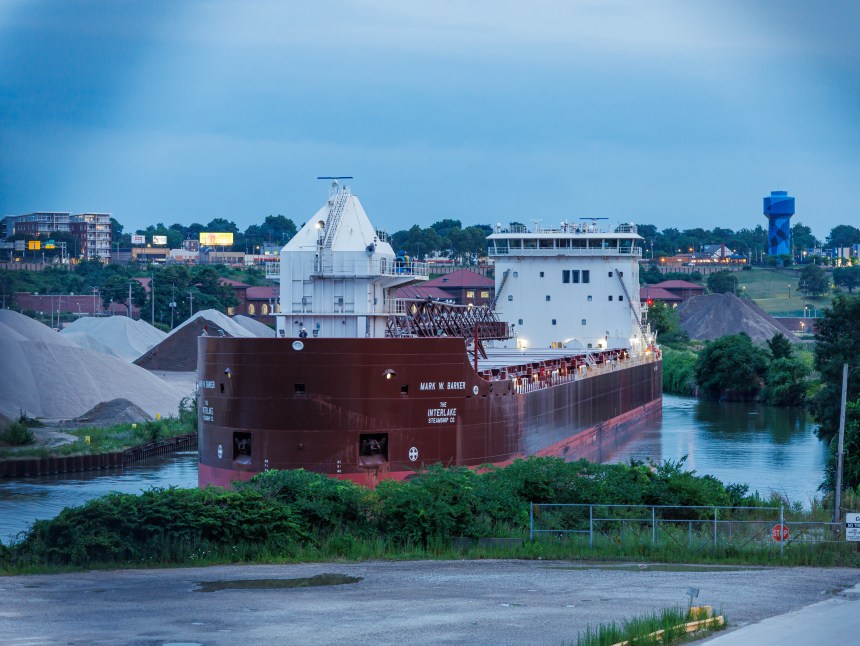
As featured in Shipwatcher News Freighters issues 78 and 79, 2025.

The shipbuilding situation

The state of the US Fleet and shipbuilding on the Lakes

By Brendan Falkowski

This article is the first in a series focusing on the current state of the Great Lakes shipping industry as we look to a future that is sustainable for both commerce and the environment.

Just over the last few months shipbuilding has gone from a forgotten industry in America to routinely making front page headlines.  The current world climate has raised alarms across the globe for renewed investments in navies and merchant fleets as world powers compete for dominance of the seas. Even with this renewed interest in maritime, the Great Lakes still go largely under the radar, something this corner of the industry knows far too well. The spotlight only seems to find the Great Lakes maritime industry when things go wrong, and almost never highlight the industry’s large role in the US economy and defense supply chain. Congressional reports cite that over 90% of the iron ore consumed by America’s steelmaking industry is mined in the Great Lakes region and shipped through the holds of Great Lakes ships. The majority of American manufacturing is tied to the ability of raw materials to flow through the Great Lakes-Seaway system. Iron ore is just one of many other cargoes that support power generation, construction, food supply chains, and more throughout the region and even the world. As the national spotlight looks to the rest of US maritime when it comes to shipbuilding, let’s take a closer look at the current situation on the Great Lakes.

Besides the Mark W. Barker and a handful of barges, new construction for the US-flagged Great Lakes fleet has not happened in any major capacity since the late 1970s, aided by Title XI benefits from the Merchant Marine Act of 1970. Title XI offered operators guaranteed financing through the government for newbuilds and modernizing existing vessels, with additional tax benefits for investing in their fleets. This legislation is what built the current fleet of Lakers we know today. The existing fleet of Lakers has been able to handle tonnage demands since the last major newbuild program, partially aided by the steady decline of coal cargoes and the cyclical nature of the North American steel industry allowing for older, obsolete vessels to be retired. The carrying capacity (sum of all US-flagged dry bulk ships) has remained steady at about 1.5 million tons over the last decade and a half, while the Canadian fleet’s capacity has remained around the 600,000-ton mark. But the American-flag fleet here on the Lakes is aging – the average age of the American Laker fleet is 52 years old. That is over one and a half times the average life expectancy of 35 years of the ships built during the last fleet renewal program in the 1970s. To further put this into perspective, the average age of the Canadian Laker fleet is only 24 years, and the average age of the international visitors to the Lakes is 12. These ships have been modified, repaired, and modernized over the course of their lives to remain efficient traders, but even though they sail in freshwater, the age of the fleet is starting to rapidly catch up.
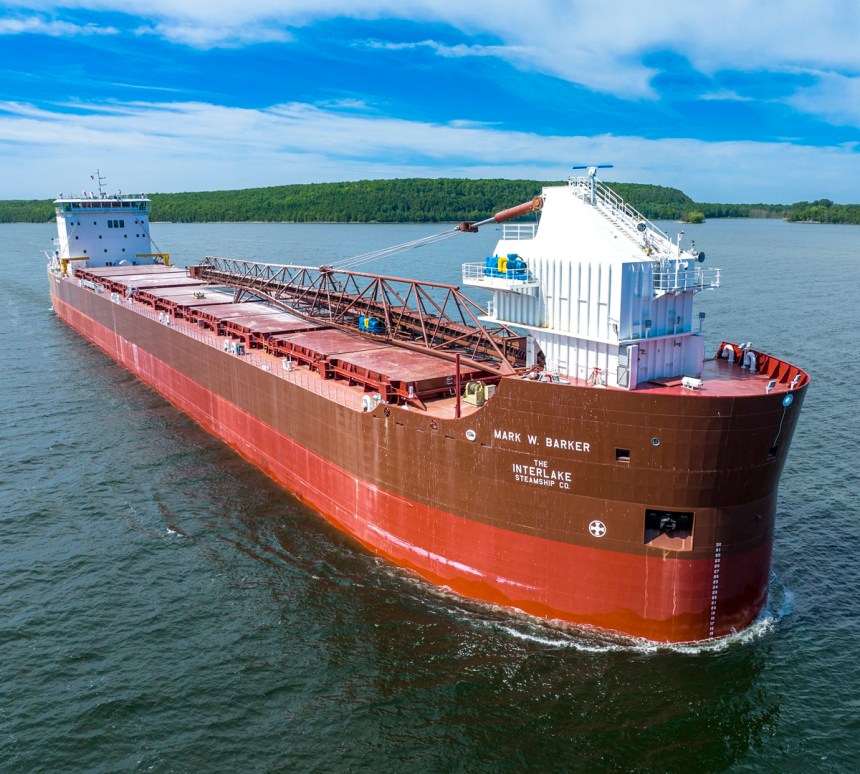
Mark W. Barker on builders’ trials, July 1, 2022. Mark W. Barker is the newest US-flagged Laker, commissioned in 2022. The construction of the Barker, as well as the construction of the ATB Michigan Trader and rebuild of barge Commander, stand as promising signs of renewed investment in Lakes supply chains. Photo by Chris Knight, courtesy of Interlake Maritime Services.

Operators seem to find themselves in a Catch-22 situation. The decline in coal transport demand in the region has significantly reduced the amount of cargo movement necessary in the region in the current market, leaving more vessels available to take on other cargoes. The demand does not exist in the sense of increased tonnage, but at the same time there is demand for new ships in the sense that the fleet will need replacement.

As for the operators, the combination of old age of the fleet and increased regulatory scrutiny have brought more unexpected repairs and work to attention. Just like when you hit the 100,000-mile point in your car, there are major repairs and maintenance items that have to be completed, with surprise issues that come up as well. With shipbuilding costs so high that newbuilds are out of reach, operators are forced to keep pushing their older ships longer and longer. This brings with it more work and maintenance to keep them going, as well as the added challenge of trying to repair old equipment. Lead times for parts that have to be specially manufactured or imported from overseas keep ships at the wall for several months at a time now. This kept the 1942-vintage cement carrier Alpena at the wall for the first six months of the 2025 season, and the 1973-built Integrated Tug-Barge Presque Isle during the summer of 2022 for three and a half months, just to name examples. These events have transpired when there is available cargo to move, forcing industry and operators to get creative in order to not fall behind. Every stakeholder on the Great Lakes should be aware of the increased potential of ships breaking down at critical infrastructure points, such as the Soo Locks or a loading dock. This would not only delay that vessel but accumulate delay time for other ships as well. The odds of this situation are only increasing at this point.
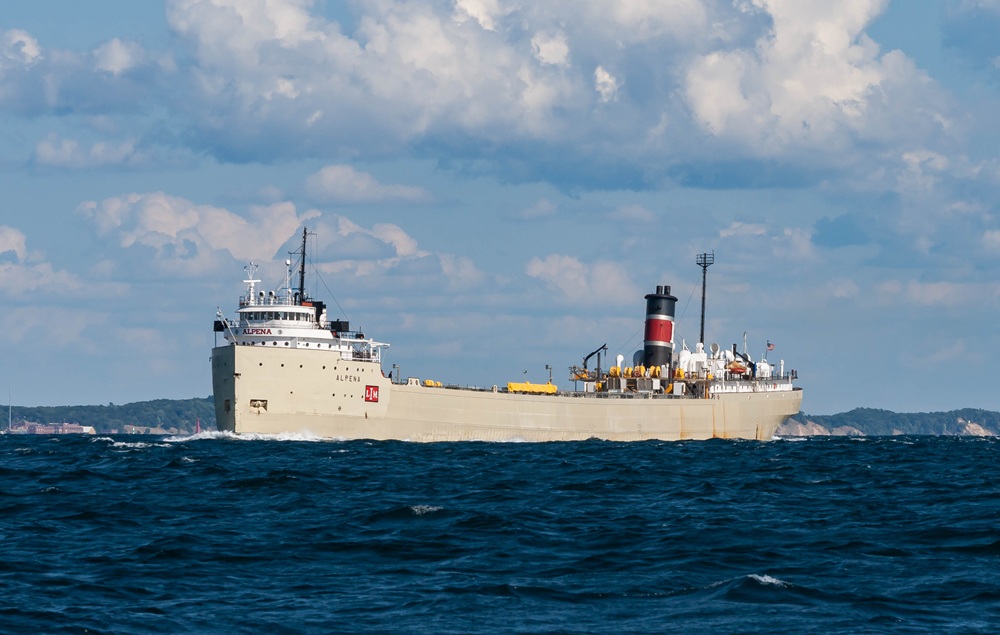
The steamer Alpena on Lake Michigan, July 29, 2023. Alpena was sidelined for six months at the beginning of the 2025 season due to critical repairs to her steam powerplant. 2025 marks her 82nd season of sailing the Great Lakes. Photo by Brendan Falkowski

Uncertainties in regulatory direction have not positively added to the equation either. Environmental regulations for emissions and directions on future fuels present a moving target for operators and engineers alike. Further regulatory discrepancies between US and Canadian agencies leads to further uncertainty on the subject of ballast water treatment systems (BWTS). While existing US Lakers that do not leave the Great Lakes-St. Lawrence Seaway system are not required to have BWTS, Canada put rules in place mandating systems onboard any vessels taking on or discharging ballast in Canadian waters by the year 2030.

Building new ships is the result of an equation that combines both demand for the new tonnage, whether that be for new cargo, replacing existing tonnage, or other initiatives, in combination with the economic factors that allow for the capital investment in new hulls. It’s a chicken and the egg situation. The Great Lakes shipping industry, and American maritime as a whole, has been caught in a tricky spot where there is demand for the new hulls in terms of fleet renewal, but the economics do not play out.

The shipping business on the Lakes is a competitive trade, where margins are tight and don’t allow for large amounts of capital to be saved for investment in new hulls, especially when the old hulls are so maintenance-intensive. To top this, current market conditions make it difficult to reinvest. Competition between operators continues to evolve, where in more recent times some have been more willing to slash operating budgets in efforts to undercut rates in a race to the bottom business style. This slims margins even more, making it more difficult for everybody to look to reinvesting in new vessels. Industries that rely on cargo movement via Lakers are attracted to the low tonnage prices, and are reluctant to look past the lowest shipping rate and invest in the long-term viability of their shipping platform through commitment to long-term partnerships. There are some exceptions, however. Interlake Steamship constructed the Mark W. Barker as the result of a long-term agreement to transport salt for Cargill. US operators are often hesitant to handle salt cargoes in order to protect their aging Lakers from the corrosive nature of the cargo. Cargill realized they needed the security of having a reliable Jones Act vessel to handle their cargo, and partnered with Interlake for a long-term solution that was realized through a newbuild Laker.
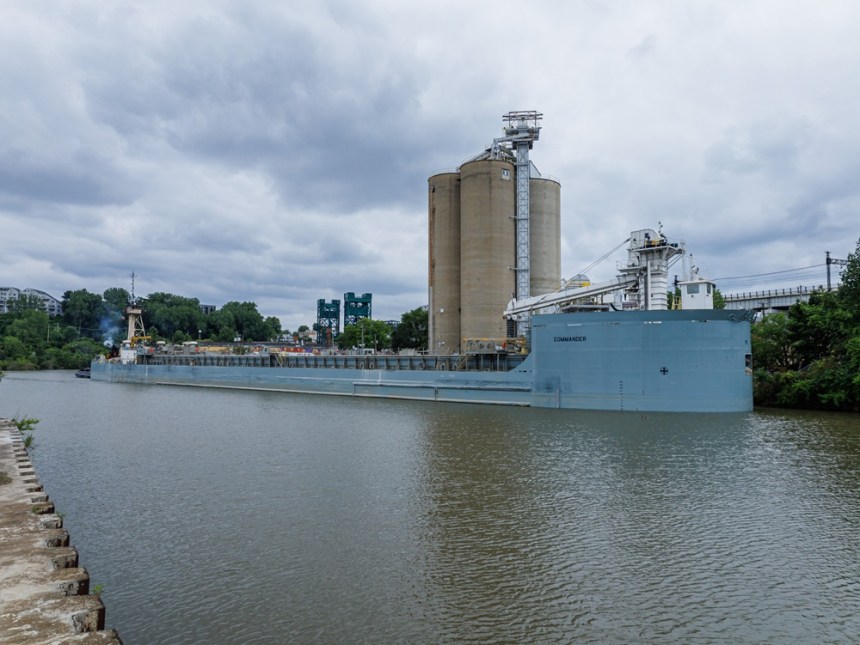
ATB Commander and tug Caroline McKee at Cleveland, OH, June 10, 2024. Commander is another example of expanding tonnage to meet a client’s transportation needs and provide an option for reliable movement of product well into the future. Commander is an ATB that was rebuilt from an existing barge in 2019. Photo by Brendan Falkowski

Domestic US shipping is regulated by the Jones Act, which mandates that ships moving cargo between US ports be US built, owned, and crewed. The US maintains very high standards in labor regulations and construction quality, but it comes at a cost so high that domestic operators are not able to justify investment in new hulls. US shipyards come nowhere close to competing with rates on the world market. Steel and labor costs are multiples of those seen around the globe. The methods of trying to surgically maintain existing vessels only adds to those costs. Laws like the Jones Act are necessary to maintain a domestic industrial base capable of producing vessels for coastwise trading and national defense, otherwise the art of shipbuilding would be lost in America as a whole. Canada is a perfect example of this, as the repeal of the Canadian-built stipulation in the Canadian Coastwise Trading Act dealt a final death blow to the Canadian commercial shipbuilding industry, with their defense shipbuilding industry even feeling the ripple effects. Canadian operators are able to build vessels overseas at a much lower cost, which has allowed them to renew their fleets at a massive scale in recent years. The prohibitively high costs at US yards further snowball into issues relating to maintaining a skilled labor workforce capable of building high quality ships when steady work is not always coming in.

Work at Great Lakes shipyards is highly cyclical, with loads ramping up on the ships during the winter layup period, but during the summer months yards have to rely on military or off-lakes contracts to keep staff busy. When the ice and snow come in wintertime, operators look at the remaining shipyards to handle several vessels-worth of projects simultaneously, and expect them to complete them in time for fit-out in March. Then when an emergency comes up in the middle of the season the shipyards are expected to turn the ship around in a matter of days. The situation can be compared to having an auto repair shop only open regularly during three months of the year, and on-demand for the remainder of the season. When repairs are necessary during the other nine months, it won’t be at the pace of a Formula 1 pit stop. The lack of consistent commercial newbuilds locally has been to the detriment of maintaining that steady workload and skilled labor. As shipbuilding has declined in the US, the skilled workforce of welders, pipefitters, electricians, and other specialists dwindled, and now finding qualified workers is a big concern. Local yards no longer feature full-service machine shops, repair facilities, or fabricating capabilities and contract out several components to a project since they cannot support those workers full-time. Additionally, Great Lakes shipyards have historically been behind the curve when it comes to adoption and implementation of advanced shipbuilding technology and methods, further driving up costs and reducing competitiveness in broader markets. 

The demand for new construction for the Jones Act Laker fleet is there, but it is a difficult target for almost every player to hit. Most new shipbuilding on the US side has been tied to long-term cargo commitments in recent years, and not as much to support existing contracts. This will have to give at some point, as the current fleet will not be able to last forever. A partial fleet renewal is likely in store at some point in the near future, with individual vessel replacement being explored for ships nearing the end of the line. Additional ship conversions to articulated tug-barge units are even more likely. The issue of financing these capital investments still remains a challenge. A full fleet renewal – such as the one seen with the Title XI subsidies and tax benefits in the 1970s – is still beyond the horizon without a change of status quo. The right combination of economic conditions may play on the side of the shippers and shipbuilders. If interest rates drop low enough to justify the payment on the debt for new tonnage in relation to the operating costs of the aging fleet, investment will be a much more attractive option for operators. If we are having the broad shipbuilding conversation, the question needs to be asked if new ships are for business expansion or retention. Major Canadian carriers like Algoma and CSL have fully renewed their fleets in recent years, but this is to preserve existing contracts, not expand into new ones. Allister Paterson, President of Canada Steamship Lines, put this into perspective in a 2015 press release about CSL’s Trillium-Class fleet renewal program.

“Great Lakes shipping is a mature market, it isn’t growing. Our Trillium program has always been about renewing our fleet, not growing it.”

While the current market is in need of new vessels to support continuing operations, other Canadian carriers such as McKeil Marine have proven that new niches can be carved out while rosters for the remainder of the fleet have turned over. Waterborne routes can be identified for more cargoes currently using land-based transportation on the American side as well.

What about the SHIPS for America Act? Great question. The SHIPS for America Act is not currently set up to have direct impact on the Great Lakes shipping industry, at least not a direct benefit. In fact, it may present further challenges in its current form. The Act does not include provisions allowing Great Lakes operators to take advantage of financing and benefits for investment in fleet renewal and modernization. Rather, it will focus on oceangoing merchant vessels and expanding the shipbuilding industrial base in order to support ramping up defense shipbuilding. This investment in the industrial base to support defense and oceangoing shipbuilding will draw workers away from the Great Lakes region and out to the major coasts, leaving labor to become even more scarce. If provisions in the Act accounted for inland transportation like the Great Lakes and Inland Waterways, the industry may be able to rebuild and set up for a more sustainable future to be able to better reliably support American manufacturing and defense. Broadly, if the SHIPS act is about maintaining what we have and expansion, that conversation needs to involve the Great Lakes, a region responsible for moving the building blocks of America. In theory, if companies were incentivized to renew their fleets and look at new business, that would stimulate the Jones Act fleet into a period of dynamic evolution. But as long as the current fleet continues sailing without real investment in renewal, operating costs and freight rates will only go up, which will trickle down through the industries down to the very cereal, appliances, automobiles, and more used by the average American. It is only a matter of time before vessels start to be sidelined due to their condition, whether it be for repairs, or worse yet, not passing regulatory inspection.
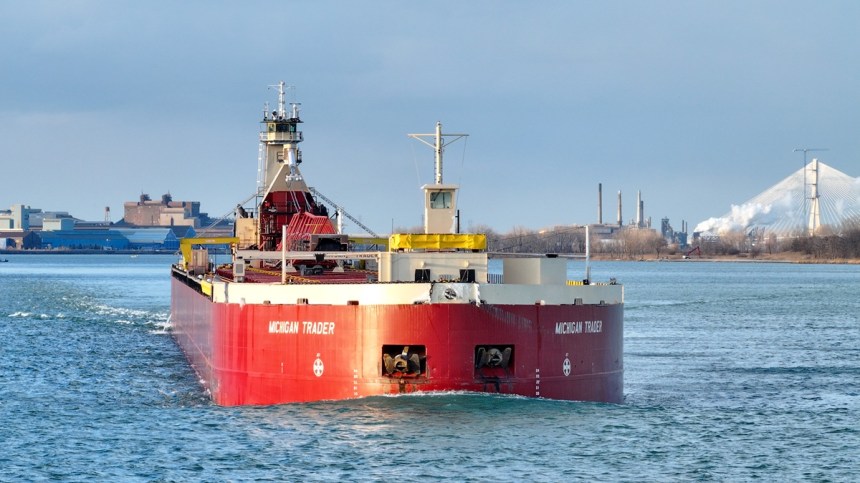
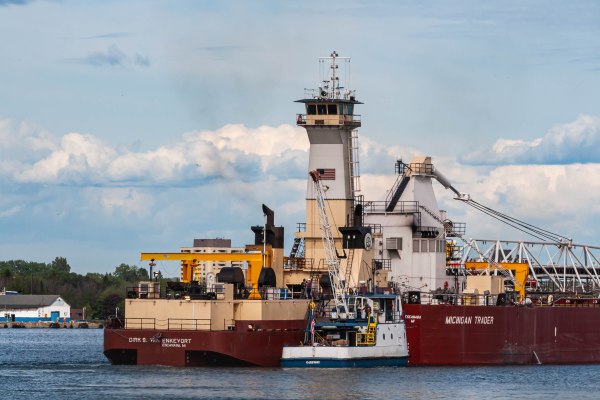
ATB Michigan Trader and tug Dirk S. VanEnkevort downbound on the Detroit River, March 25, 2025. ATB Michigan Trader is one of the newest US-flag Lakers, commissioned in 2020. Photo by Sam Hankinson

There is a long road of challenges to face to make it possible to revive the shipbuilding industry in the Great Lakes region and renew the Great Lakes fleet for a sustainable future. It will take getting creative to find ways to economically justify building new ships, and efforts from shippers to shipbuilders to the industries they serve to make this possible to rebuild for long-term sustainability. The Great Lakes was once a center for shipbuilding prowess and innovation, and can be once again with renewed investment and strategic planning.

Special thanks to Travis Martin and Fred Koller from Bay Engineering, Eric Helder from Interlake Maritime Services, Nick Hunter from NETSCo./EBDG, and Chuck Canestraight from Port City Marine Services for contributing their professional insight for this story.


Replies to this email are sent to the editor of Shipwatcher News

79 Freighters Summer 2025

The Summer 2025 edition of Shipwatcher News’ Freighters is out now! From welcoming new ships and saying farewell to old fleetmates to the current state of Great Lakes shipbuilding and repair, it is all covered in this issue. Enjoy the latest edition!

In this issue:

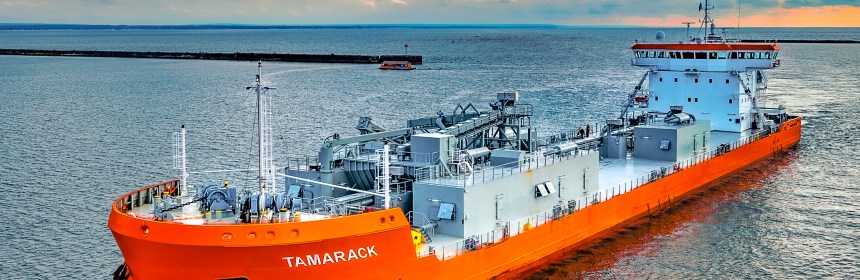
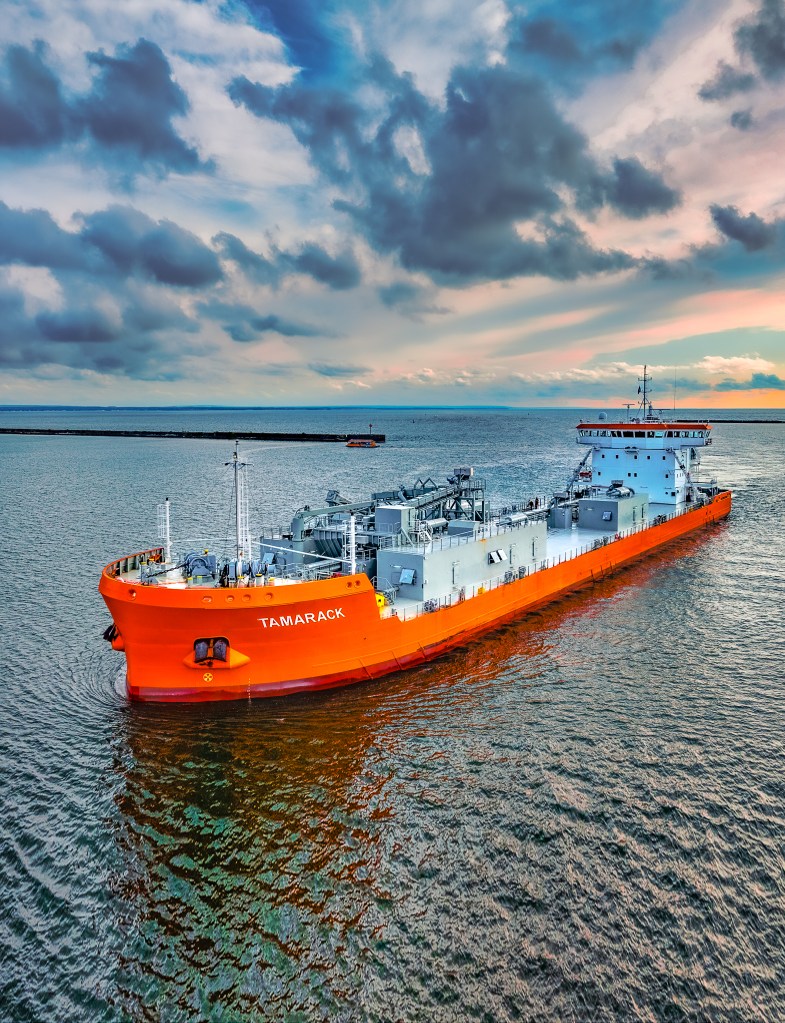
  • New cement carrier Tamarack arrives home
  • The modern crane-conveyor ship
  • Farewell to the Cuyahoga
  • In the design: The Shipbuilding Situation – Part II
  • Featured Vessel: ATB Maumee / Victory

Replies to this email are sent to the editor of Shipwatcher News

THEY DELIVER

A spotlight on Soo Marine Supply, as featured in Shipwatcher News Freighters issue 78, Spring 2025.

They Deliver

SOO MARINE SUPPLY KEEPS THE BOATS SUPPLIED

By Brendan Falkowski and Ryan Miller

The authors visited the Soo Marine Supply warehouse and were able to observe a supply run to the Stewart J. Cort in June 2024. Special thanks to Soo Marine Supply General Manager Brent Belanger for making this possible.

Nestled down off Portage Avenue along the St. Marys River in Sault Ste. Marie, MI, Soo Marine Supply (SMS) has been serving Great Lakes freighters for over 124 years. While it may not appear like much from the road, down that driveway lies a vital supply line necessary for provisioning the ships, but more importantly the crews. The ships run from March to January with little time to stop while in port. Soo Marine Supply provides a solution, delivering groceries, supplies, and people to the ships as they pass by Sault Ste. Marie, MI.

The service was first initiated in 1901, served by the wood-hulled ferry Superior. She operated in the supply boat capacity from 1901 to 1917 when she was replaced by another reconstructed ferry, the Frontier. Frontier served as the Soo supply boat from 1917 until June 1, 1947, when the current supply boat, Ojibway, entered service. The supply service was originally started to stock U.S. Steel’s newly-created Pittsburgh Steamship fleet with ice, food and groceries, parts, and other supplies, but also later served the fleets of Bradley Transportation, Great Lakes Steamship, and Hutchinson & Co. U.S. Steel spun off the supply boat service with their marine division in the late 1980s. The warehouse and supply boat Ojibway were sold to MCM Marine in 2003, who renamed the business Soo Marine Supply and continues to supply the ships today.

Historic Soo supply boat FRONTIER, supplying a Pittsburgh Steamship vessel. Photo: MHSD Collection

Soo Marine primarily serves the American fleets of Interlake Steamship Co., Great Lakes Fleet, and VanEnkevort Tug & Barge, as well as other vessels by request. SMS doesn’t operate on contracts with the shippers, but rather on an on-demand basis, making deliveries and fulfilling services when they are needed.

SMS General Manager Brent Belanger explained to us the different supplies they can and have delivered. He produced from his desk a stapled packet of paper and passed it to us to look through. On the pages were roughly 500 lines of everything you’d expect to find at your local grocery store, apple sauce, pudding, soap, and paper towels. While flipping through the many pages, Belanger continued to explain the various other supplies like gear oil, steel cables, argon tanks, and deployable life rafts that were on the order form. In addition to the listed items there is a final page that’s blank with lines where freighter crews could request specific items that Soo Marine Supplies would then source. In addition, they can perform crew transfers with rental cars arranged and personal storage lockers for their gear.

Orders are put in by the ships about 36 hours prior to passing through the Soo Locks, giving the crew at SMS enough time to pull together everything in preparation for delivery. For some special orders that may not be stocked in the warehouse, SMS crew will make runs out to local stores to attempt to find requested products.

Typically, a big order would be placed at the beginning of the season during fit-out. The crew needs to eat. Supplies need to be stocked. Soo Marine’s tasks during fit out can include requisitioning necessary spare parts for preventative maintenance, extra engineering supplies, replacement safety gear, and stocking the kitchen by ordering nonperishable bulk baking or cooking ingredients. The SMS crew loads supplies into their trucks for destinations ranging from Sturgeon Bay and Superior, WI, to Toledo, OH, and even Erie, PA, to get the ships ready to go. Throughout the shipping season, crews place additional orders to restock perishable and consumable goods. While resupplies can occur at ports, receiving them while underway is most convenient for the crew. As so many boats pass through the Soo Locks, it’s a natural place to have a transfer location.

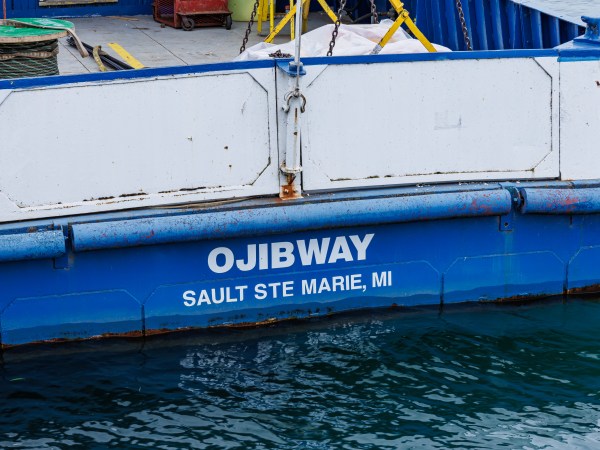
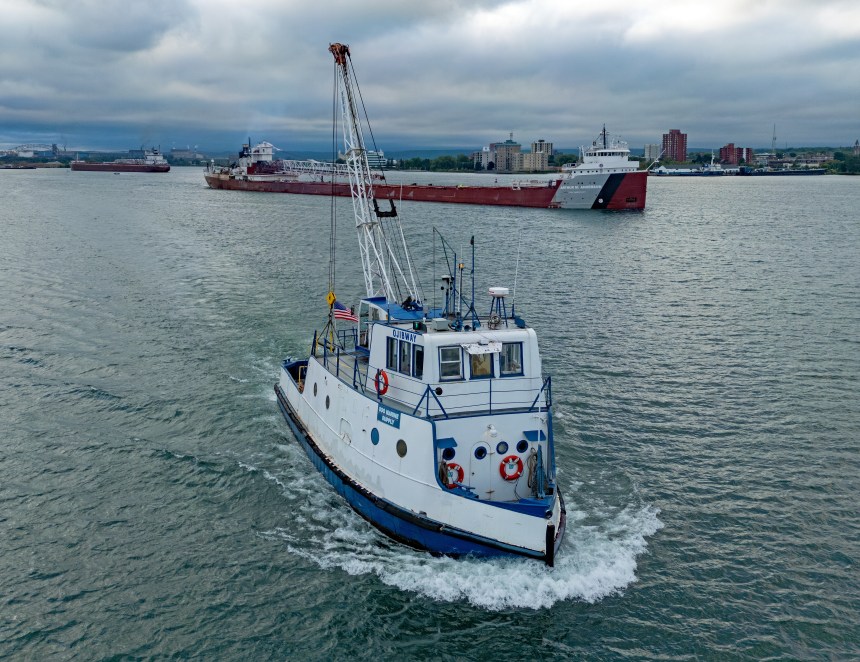
Detail of OJIBWAY, June 28, 2024. Photo: Brendan Falkowski

The facility includes two main warehouses: a stock room and a staging room. Walking through the staging room, shelving units were labeled with bright red tags punched with the names like Hon. James L Oberstar, Mesabi Miner, and other iconic freighters. The traces of heritage were evident even in the warehouse where a hard-to-reach shelving unit still bore a Henry Ford II name tag. On these shelves were custom metal skids that could be moved with a high-low or picked up by crane. Workers assembled orders by picking supplies from the stock room and moving them to the awaiting skids in the staging room. After being shown around the warehouses, it was time to get aboard the supply boat Ojibway.

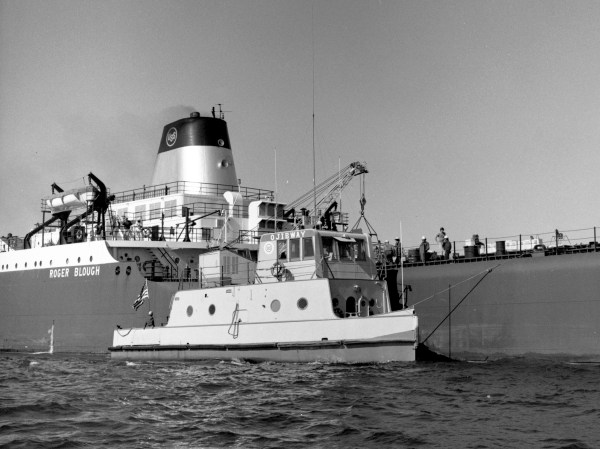
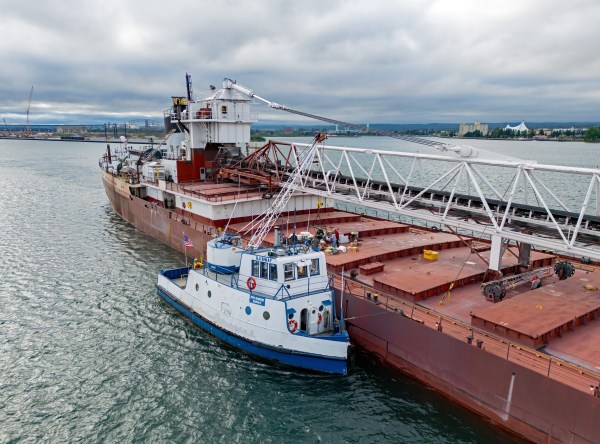
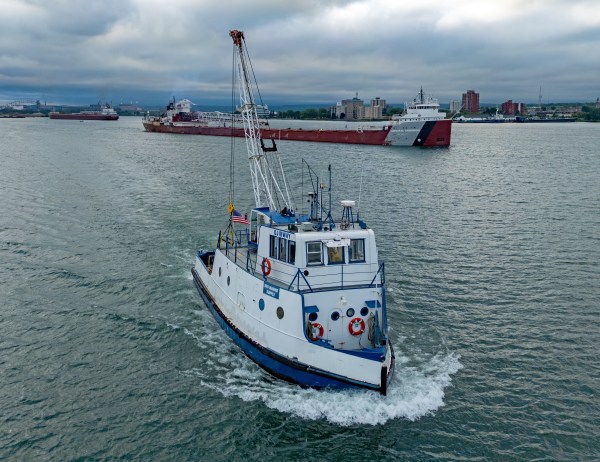
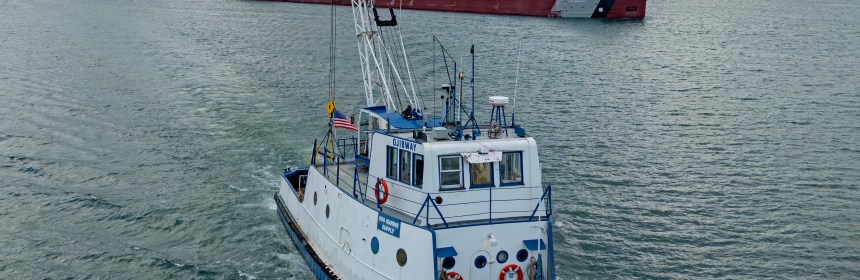
The Ojibway is a short and stout looking resupply boat that was designed and built in 1946 following World War II. It’s clearly designed for working. In the center of the boat sits a superstructure with a spartan interior that mainly serves to elevate the pilot house and a crane. The crane, on a turntable, is able to rotate off the sides to transfer supplies onto the deck of passing freighters. Aft of the superstructure is an open deck to load cargo. Sectioned into four quadrants, skids are loaded nicely with enough room between them to let crew walk around them. Below deck is the engine room with a rather healthy amount of space – definitely enough room to get a wrench in. While old, the Ojibway is not poorly maintained. She starts with no hesitation and the crane runs smoothly.

OJIBWAY supplying the ROGER BLOUGH, early 1970s. Photo: Roger LeLievre

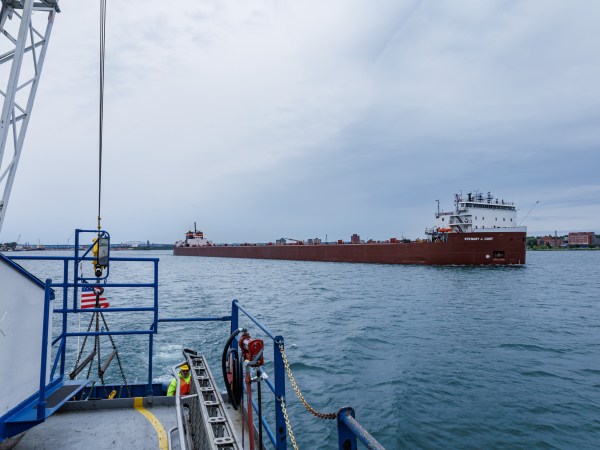
As the approaching ship exits the Soo Locks – when supplying while downbound – or rounding Mission Point when upbound, the boat crew heads out to Ojibway for their sprint out to the passing freighter. On June 28, 2024, Ojibway was supplying the downbound Stewart J. Cort. Typically, ships are supplied while transiting downbound, though some are supplied on the upbound. In an interesting situation of policy, a vessel is considered soil of the country it most recently made port, so a vessel that most recently called on a US port is considered “American soil” and one that called on a Canadian port is considered “Canadian soil”. In order to avoid some extra paperwork, vessels are almost always supplied when considered “American soil”.

OJIBWAY supplying DIRK S. VANENKEVORT, June 8, 2022. Photo: Brendan Falkowski

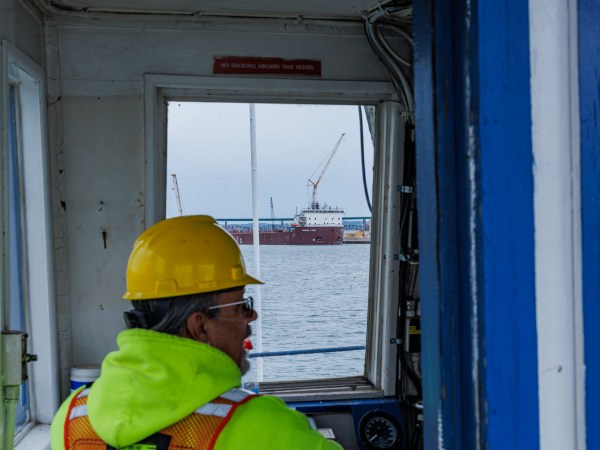
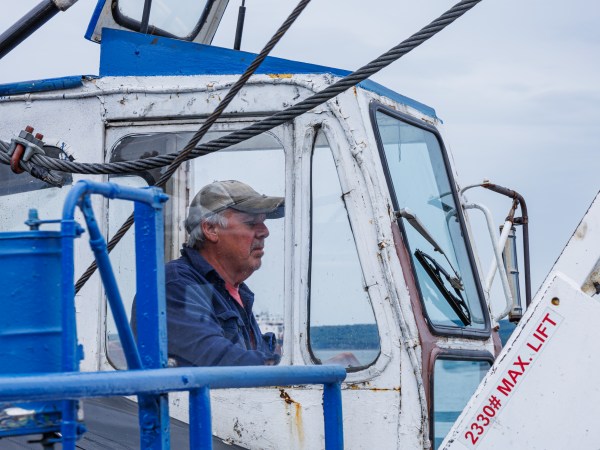
Once on board now operating as captain, Belanger provided the safety brief: respect the crane and stay clear of the deck crew. He went belowdecks to fire up the single diesel engine, then he climbed the three ladders up to the wheelhouse at the top deck. Three more crew got onboard – two deckhands and a crane operator – before lines were cast off and Ojibway got underway. The supply boat makes way towards the Soo Locks to rendezvous with the Cort. As Ojibway comes to meet the Cort, she turns in a big, swooping turn and pulls up alongside. Over the VHF, Belanger established communication with the bridge of the Cort to synchronize speed and establish a rafting location. A single line is cast down to the bow of the Ojibway to hold her in place; the momentum of the Cort’s forward motion helps keep Ojibway tight alongside.

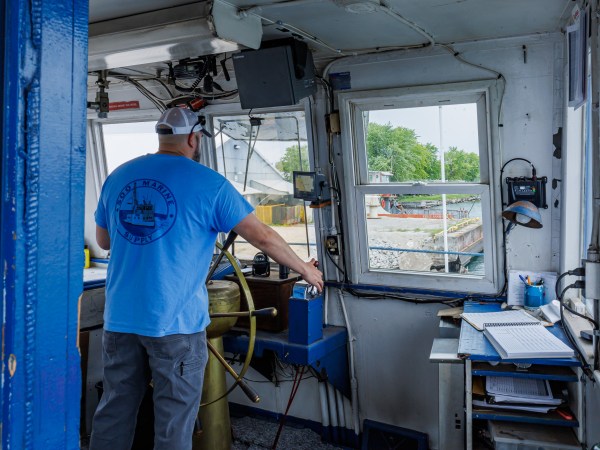
Brent Belanger at the wheel of the OJIBWAY, preparing to depart the dock, June 28, 2024. Photo: Brendan Falkowski
A crewmember of the OJIBWAY in the pilothouse, June 28, 2024. Photo: Brendan Falkowski
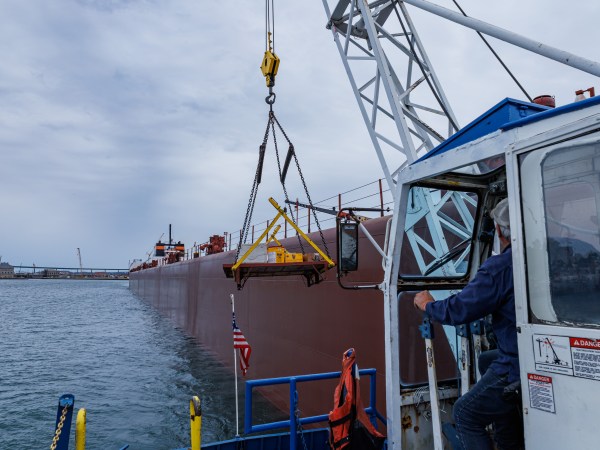
Crane operator at work on the OJIBWAY, June 28, 2024. Photo: Brendan Falkowski

Nearly as soon as the line is tied off, the crane operator gets right to work. The first skip is already loaded in the bridle and ready to go. Like clockwork, the crane operator makes the whole operation look easy, quickly and smoothly moving the skips full of supplies from the fantail of the Ojibway up to the spar deck on the freighter. The two deckhands help load and unload skips on Ojibway, while the crew of the Cort take care of the operation up on deck. Next went the odd shaped items, a coil of wire rope and bundle of steel tubes were picked and hoisted aboard. After all of the supplies are unloaded from the skips on the Cort, the crew then loads up any trash and recycling to send back to shore. The reverse process ensues, loading everything back onto Ojibway. After the transaction is complete, the line is cast off and Ojibway heads back to home base. A traditional Great Lakes greeting, one long and two short blasts on the horn, were exchanged as the vessels part ways. Meanwhile Stewart J. Cort continues her trip to Burns Harbor, IN, to unload her belly of taconite pellets.

Loading supplies to the spar deck of the STEWART J. CORT, June 28, 2024. Photo: Brendan Falkowski
Supply boat OJIBWAY supplying the ARTHUR M. ANDERSON, June 29, 2024. Photo: Gus Schauer

As the Ojibway comes back to the dock, she swoops up from the east and gracefully brushes up against the dock. The lines that were cast only half an hour earlier were retied again. The diesel downstairs is shut down and the crew immediately begins unloading the boat, swiftly slinging skips back up to the dock and unloading the trash and recycling from the Cort. Trash is sent to the dumpster, while the recycling is all sorted and stowed in a customized recycling trailer. When full, the trailer is taken to the recycling center to be emptied. Interlake Steamship Company and other companies have specific agreements with Soo Marine Supply to handle refuse. Soo Marine Supply keeps a cardboard recycling trailer at the dock. Working with Northern Transitions (NTI), Soo Marine Supply is able to responsibly dispose of waste. The crew all return to their respective places, awaiting the call for the next supply run.

OJIBWAY heads back to the dock after supplying the STEWART J. CORT, June 28, 2024. Photo: Brendan Falkowski

We were left with a new appreciation and respect for the Soo Marine Supply group and their employees. This glimpse into Soo Marine Supply shows the critical role that smaller companies contribute to making the Great Lakes shipping ecosystem healthy and efficient. It was clear the Soo Marine Supply crew knew their responsibilities, all the way from perfect docking alongside the Cort and back at the dock to effortless equipment operation and solid communication leading to a safe work space.

Supply boat OJIBWAY returns to the dock after supplying the ARTHUR M. ANDERSON, June 29, 2024. Photo: Gus Schauer

Replies to this email are sent to the editor of Shipwatcher News

78 Freighters Spring 2025

The Spring 2025 edition of Shipwatcher News’ Freighters is here! From recent industry changes to the current state of the Great Lakes fleet, it is all covered in this issue. Enjoy the latest edition!

In this issue:

  • They deliver: Soo Marine Supply keeps the boats supplied
  • Great Lakes debut for two Canadian ships
  • Hon. James L. Oberstar grounds in St. Marys River
  • In the design: The shipbuilding situation
  • Featured Vessel: Herbert C. Jackson

Replies to this email are sent to the editor of Shipwatcher News

77 Freighters Winter 2025 [Updated Link]

The boats are back to moving again and the Winter 2025 edition of Shipwatcher News’ Freighters newsletter is here to celebrate! Enjoy the latest edition!

In case the link did not work in the original mailing, here is another link to the latest newsletter!

In this issue:

  • Manitoulin broken out after four days locked in ice
  • Aluminum and steel imports could affect Great Lakes trade
  • Algoma takes delivery of three vessels
  • Peyton’s Place: Modern container shipping and the Great Lakes
  • In the design: vessel stability
  • Featured Vessel: CSL Assiniboine

Replies to this email are sent to the editor of Shipwatcher News

77 Freighters Winter 2025

The boats are back to moving again and the Winter 2025 edition of Shipwatcher News’ Freighters newsletter is here to celebrate! Enjoy the latest edition!

In this issue:

  • Manitoulin broken out after four days locked in ice
  • Aluminum and steel imports could affect Great Lakes trade
  • Algoma takes delivery of three vessels
  • Peyton’s Place: Modern container shipping and the Great Lakes
  • In the design: vessel stability
  • Featured Vessel: CSL Assiniboine

Replies to this email are sent to the editor of Shipwatcher News

76 Freighters Fall 2024

The News is in!

In this issue:

  • Plans announced for biofuel facility in Port Colborne
  • Tim S. Dool freed from grounding in St. Lawrence
  • Event connects marine industry with agriculture
  • Of Greyhounds and Limestone: The Michigan Limestone and Bradley Transportation story Pt. II
  • In the design: fire safety in design
  • Featured Vessel: St. Marys Challenger / Prentiss Brown

Happy New Year! Enjoy the newsletter!

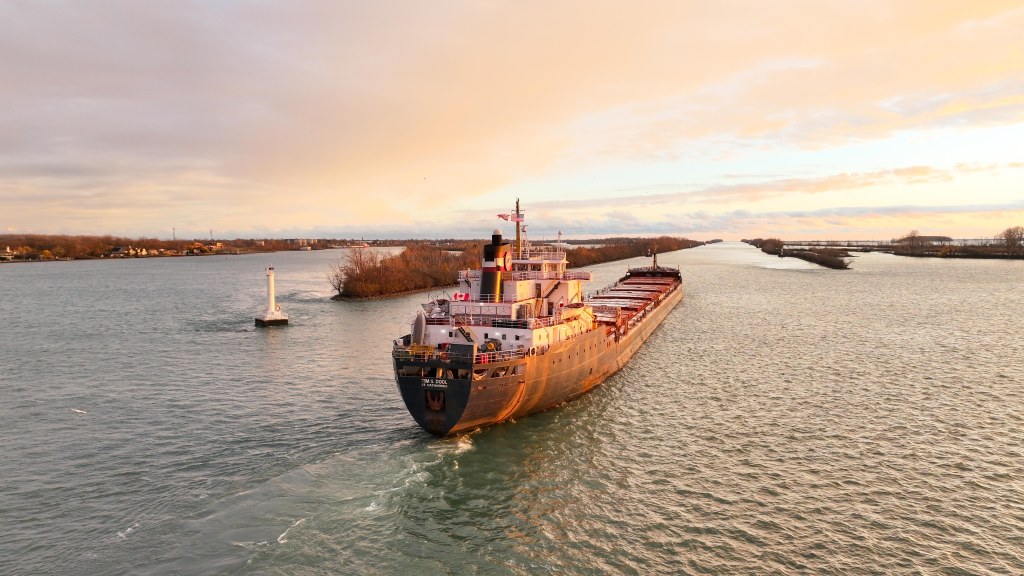
Tim S. Dool on the Detroit River, November 20, 2024. Photo: Sam Hankinson

If you would like to reply to the newsletter announcement message, reply to this email.

75 Freighters Summer 2024

The News is in!

In this issue:

  • Algoma continues tanker fleet expansion
  • Rand Logistics acquires Andrie
  • Of Greyhounds and Limestone: The Michigan Limestone and Bradley Transportation story Pt. I
  • In the design: safety equipment & design
  • Featured Vessel: Radcliffe R. Latimer
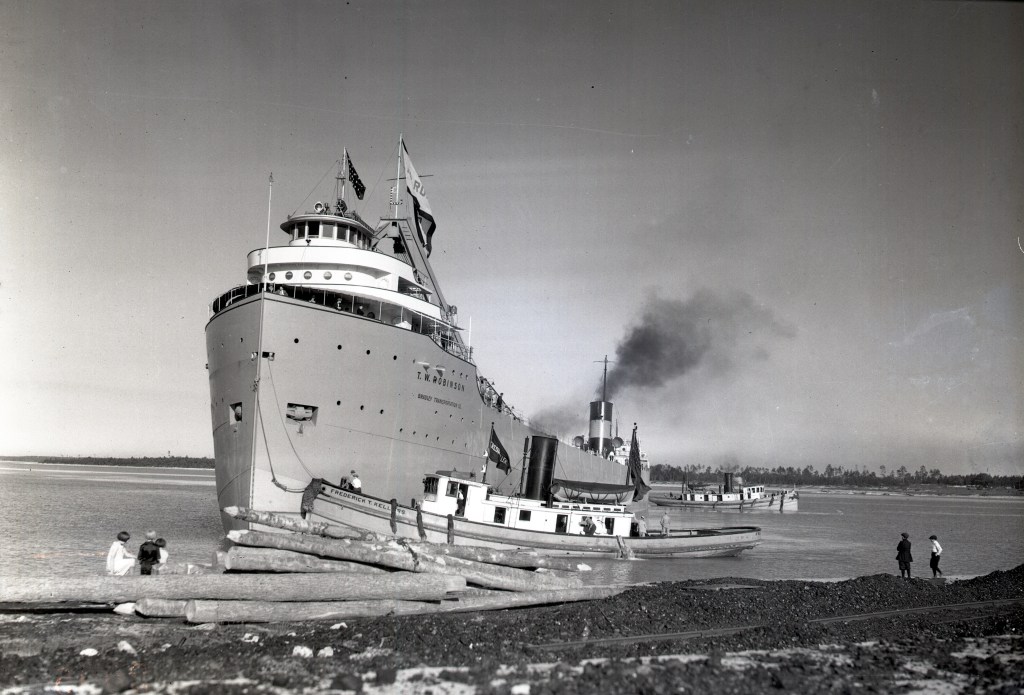
The Str. T. W. Robinson being guided into port at Calcite, MI, by tugs Central and Frederick T. Kellers. Photo Courtesy of Presque Isle County Historical Museum

74 Freighters Spring 2024

The News is in!

In this issue:

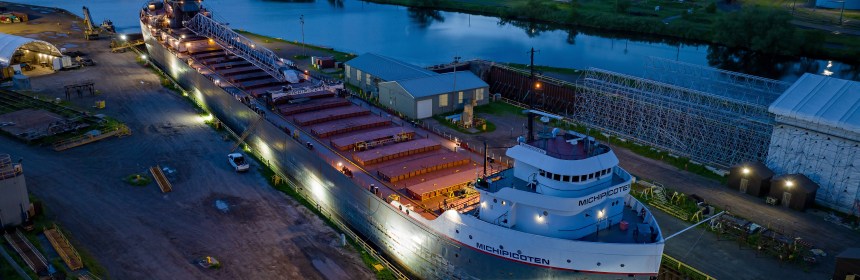
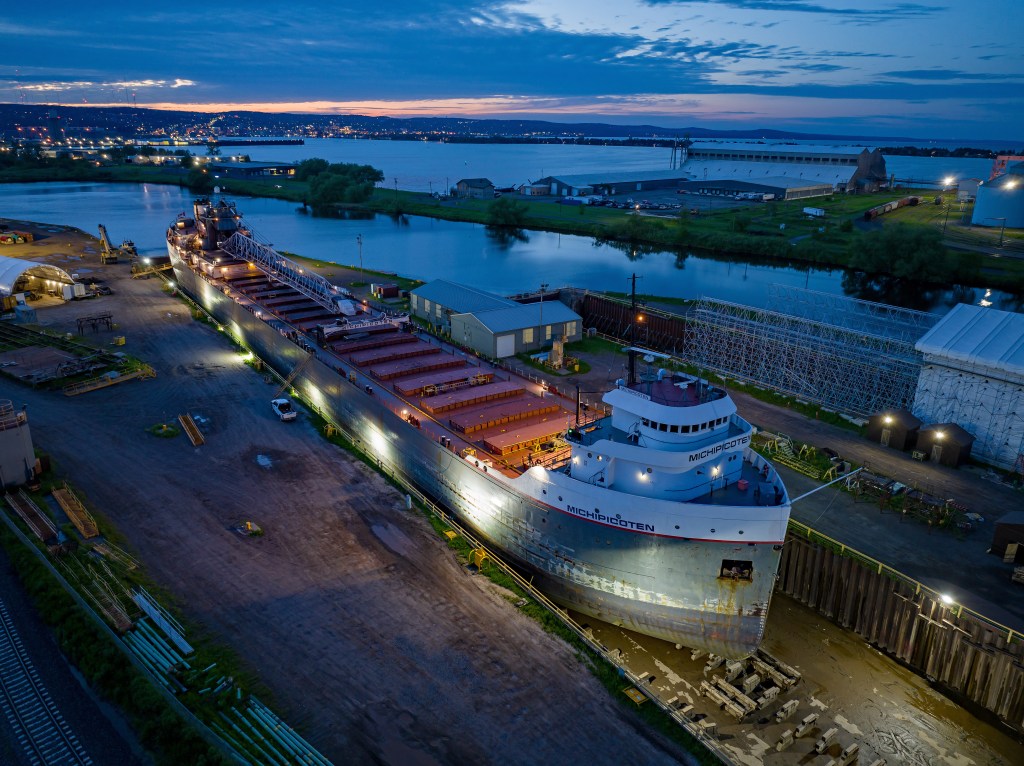
  • When the hull breaks: Michipicoten suffers serious hull crack on Lake Superior
  • Eureka Shipping announces construction of new cement carrier
  • Wheels of Wonder: The story of the rotary unloading elevators
  • Standing tall against the sands of time: The history of Sand Products Corp. Pt II
  • In the design: the wake of disaster
  • Featured Vessel: Cuyahoga
Michipicoten undergoing repairs in drydock at Fraser Shipyards, Superior WI, June 21, 2024. Photo: David Schauer

73 Freighters Winter 2024

The News is in!

In this issue:

  • Standing tall against the sands of time: The history of Sand Products Corporation
  • Fire strikes Cuyahoga again
  • 2024 Shipping season underway
  • Canadian Ranger: The first forward boom boat
  • Engineering: Diesel Exhaust Scrubbers
  • Featured Vessel: Presque Isle
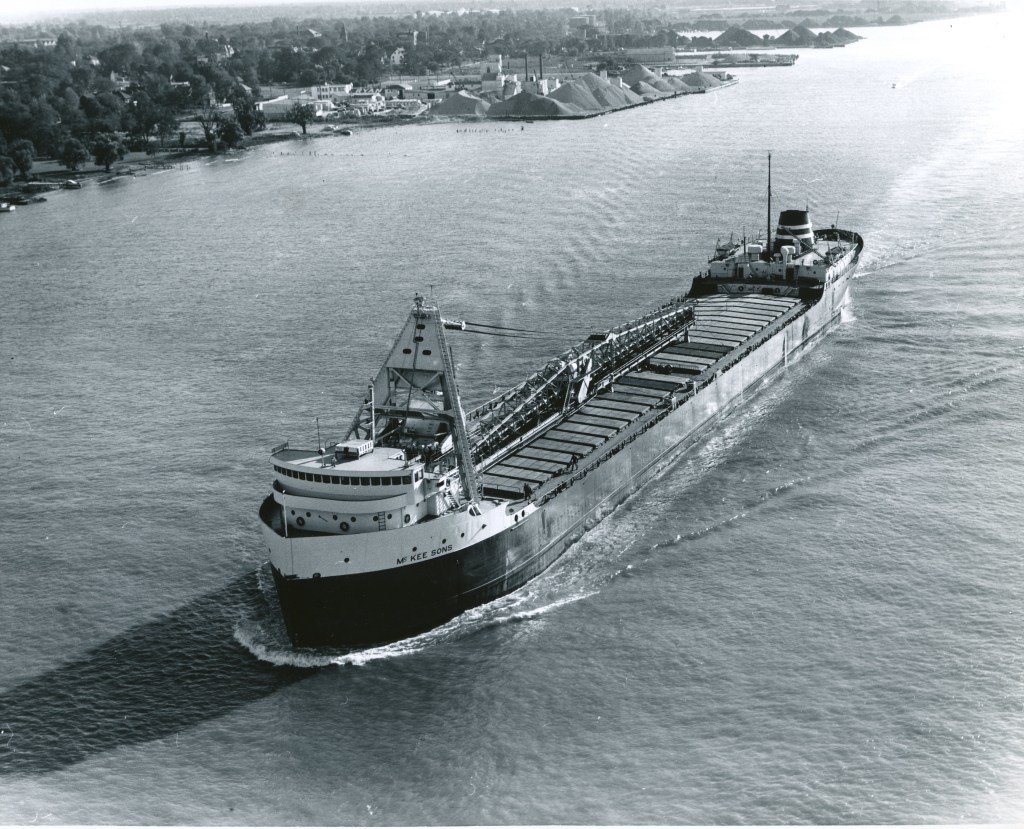
McKee Sons passing beneath the Ambassador Bridge, Detroit River, October 5, 1958. Photo: Elmer Treloar, McKee Collection
« Older Entries